lunes, 17 de febrero de 2020

EIGHTEENTH WEEK


Eighteenth Week

Today Monday 17th, We have to take two exams, one about Surfaces and second one about writing in English and replying five general questions. At 8:00 a,m we will have our first exam with Julen, likely he will give us a couple of exercises to solve, this exam will last two hour (from 8:00 a.m to 10:00 a.m). After finishing our first exam, we'll continue with Richard and his exam will be from 12:15 p.m to 14:00 p.m. Moreover Gaizka owns an hour between the two exams, he will tell us about the last exam that was taken by him about deep drawing processes.
As we can see on the right, it is the first exercise to have been proposed to solve, for that purpose we had to use several commands such as cylinder, sphere, fill, cut, trim and sweep.
I think it was the hardest exercise of the two, because someone who wants to solve it , needs lots of criteria and think quickly. At the end of 30 minutes we could finish it properly without any trouble. The key for this is to put points into space through coordinates and then through those start to create bodies such as cylinders and a sphere as main tools to solve it.

On the left, it is presented the second exercise proposed by Julen in the last exam of Surfaces. At first sight we can say that this exercise could be the most important or hardest one, but actually it was the easiest one, First we created all the needed sketches to start drawing the main surfaces. As we see on the left figure there is a curved shape figure, this was created by using only one sketch and making extrude symmetrically. As a second step we drew a sketch to create a crossing cylinder in order to cut the preview curved shape surface, and applying trim we can obtain an entire surface without the hole seen in the figure. Finally as third stage we drew a new transversal cylinder in order to create a hole on the preview made surfaces. Once we finished drawing it then we apply the split command and it removes the last made cylinder so finally the exercise is done. After ending those exercises up, right away we send them to Julen by e-mail.

As professors and students know, this will be probably the last week of classes for most of us because all students from 2DFM are going to practice in diverse businesses as part of the course and it'll last three months from March to June approximately. We hope to successfully complete it. After two year of intense learning and sharing thoughts and experiences we believe this course will help us further in our professional path in the mechanical design and manufacturing.

lunes, 10 de febrero de 2020

SEVENTEENTH WEEK


Seventeenth Week

On Monday 10th, all students from class got started learning new commands and properties of Surface platform on CATIA. For instance, commands such as Trim, Sweep, Variable offset, Split, Fill and other were taught. Those commands were and are very useful at the moment of drawing any kind of shapes in the Surface platform of CATIA.
I. On the right a complex shape is shown. In order to create the surface of that shape we need to use multiple sketches and advanced commands. For instance, Sweep was used to create the top ceiling by using two curved profiles. After that, sideways are created using Sweep again, Finally variable rounding are creating using the command variable fillet, it was quite useful for the complexity of the body. Finally the surface of that complex body was completed successfully.
Moreover, an oral English text was scheduled for this Monday. The test was about to create two telephone dialogues, one about inviting a frind to go out and a second one about booking in a hote. For that purpose Richard asked us to make groups of two people in order to make a roll play easily and fast. My partner and I practiced before taking the test, after some minutes our turn came and we went to a small hall where Richard was waiting for every couple, at the beginning he explained us about the roll play and we respectively chose our roll in each dialogue. Through the chat between my partner and I, Richard scored our oral skills individually so he could get a mark from each one. Unfortunately some couples could not take the test because at least one of them went to work.

On Tuesday 11st, almost all day we had a large class of deep drawing processes, Gayzka taught us how to calculate sizes from different shapes. The most highlighting themre for us because it is something quite required in lots of businesses in The Basque Country and likely there can be more job offers in that area. The class was quite hightlighting for us becase we had the chance to know how those complex forms are made from a simple sheetmetal form and how materials behave in different situations when forces are applied on them. We started calculationg a metal body with the shape of a hat, its calculation was very easy to do; only having some thoughtfulnesses are needed. After we finished calculating that hat, we proceeded to calculate another more complex shape which contains more than once stage to achieve that needed shape. It was mind blowing for some of us because it had a lot of condideration and criteria to go forward with it.  After some hours he asked us to make a summary of the current situation of the die, specifically the manufacturing of it. That report was made individually. He wanted to score our work indivudually, for that reason the report was made.
Next my report is shown as a sample:
On Wednesday 12nd, Julen gave us some exercises of surfaces that we had to draw in CATIA, it was increasing the complexity of the shapes and we needed to use more commands or criteria to solve some troubles at the moment of carrying on with it. We were supposed to take an exam of surfaces this day but unfortunately we could not because as I mentioned before there were some couples of students that did not take the exam. It took a couple of hour to finish the test for them. After ending the class of surfaces up, we continued drawing more pieces which belong to the plastic injection equipment assigned us by teachers. Some members of my group were drawing blueprints of some created pieces. On the right a proposed exercise by Julen is shown. we can notice angled surfaces and different profiles through different levels of the body.

Besides Julen's class, we also had a class with Nagore , she asked us to carry on drawing blueprints relating to the third challenge so that we can end that up on time.  My friends and I did all drawings we could. Afer her class, Iranzu entered to our hall and gave us a new task for next week.
She said: " A detailed list of questions has been uploaded on our on-line platform, there you can download it easily and see what it is about", after saying those words she gave us more details about the given task. It was quite simple we will have to ask some questions to another group and register all replies, but those replies must be supported by them seriously.

On Thursday 13rd, again we had classes with Julen and his hours he helped us to correct some mistakes made in our drawings. After some minutes he carried on teaching new surfaces in CATIA so that we could give an excellent exam on next Monday. For most of us is turning out a bit difficult to deal with surfaces for its complexity. After Julen's class, Iranzu gave us a new task, this time we would have to write a SWOT analisys of our curret situation down; it's scheduled to deliver it to her on Wednesday 26th.

Finally on Friday 14th, there was a long exam from 9:00 a.m to 12:15 p.m about deep drawing processes; this exam belongs to Gayzka's course. Before taking the exam of Gaizka, we were invited to the major hall in Maristak, there it was taking place a exposition about the manufacturing of the die and it was spoken by students from the machining course. It was interesting to see how know much they knew about the die. Once we carried out with it, we returned to our hall and started to take the exam. That exam had two parts, the first one was about to calculate sizes of sheetmetal and the second one was about to draw the same proposed body in CATIA showing all taken steps to achieve the final body.

lunes, 3 de febrero de 2020

SIXTEENTH WEEK


Sixteenth Week


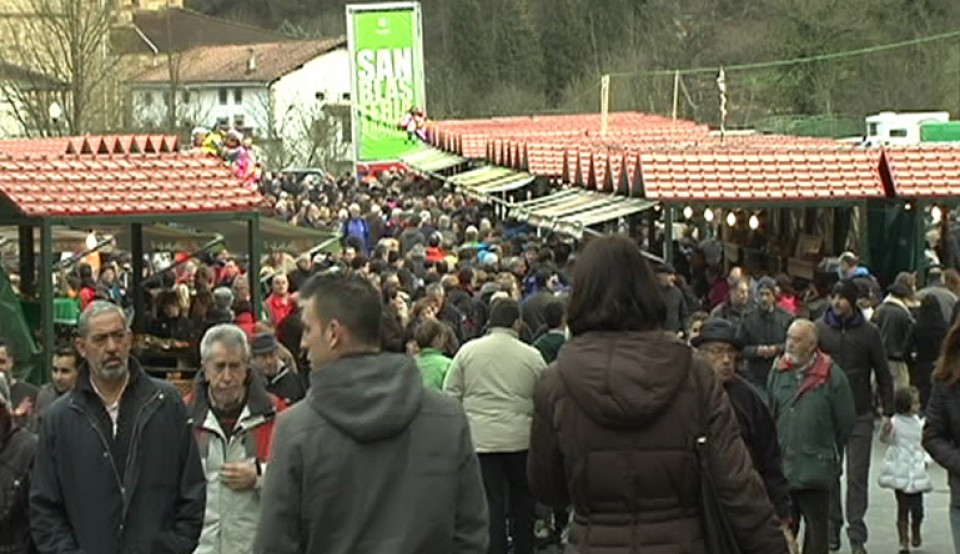
Resultado de imagen de san blas abadiño 2020"
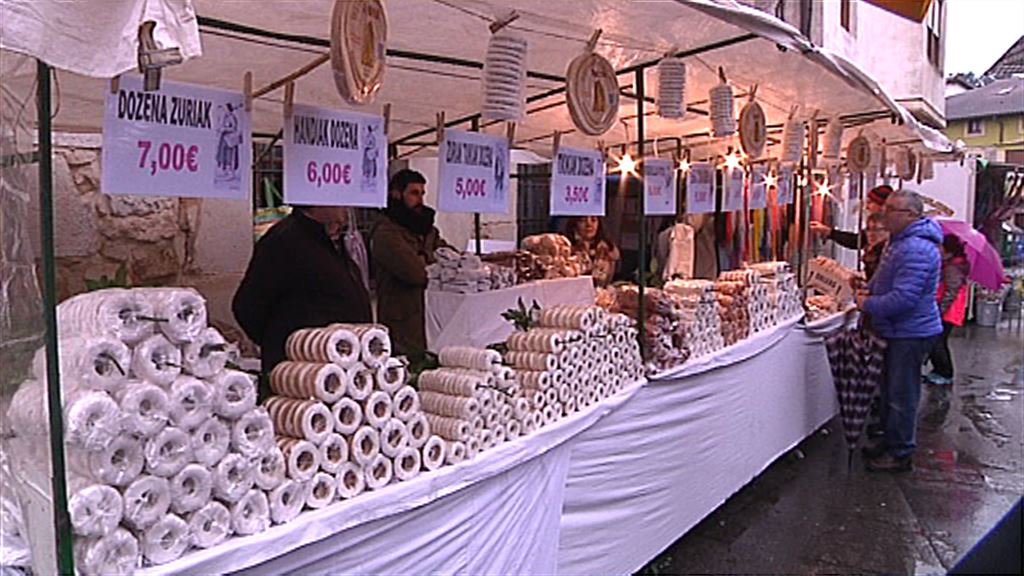
On Monday we didn't have class because it was the patron Saint's day of Abadiño, San Blas. In these Patron Saint's celebrations, cattle are brought to the town square and in the same square traditional foods of the Basque Country are prepared and sold. It is a good day to go sightseeing and buy homemade food while you enjoy seeing hundreds of animals just a few centimeters away.Resultado de imagen de san blas abadiño 2020"


On top we can see people from The Basque Country and foreigners too are going for a walk and join themselves to the local celebrations. On the left there is a street market where people can look at diverse products which are offered by local entreprenuers. People can find delicious dishes and products from the zone and they have the chance to learn a little bit of the culture of native people from there.


On Tueday, at first hours  there was a planned class by our teacher of Technical drawing. That class was about Surfaces , how to create surfaces on Catia V5 precisely. At the beginning of the subjet our teacher taught us some basic info about how we should use all commands inside the platform and their functions. After getting into the platform of surfaces, we proceeded to practice with exercises in order to get used to it and get confidence. 
Next we are gointo to show some samples of exercises linked to surfaces through Catia V5:


We can see in the next image the main stages that we need to follow in order to work properly in the module of Generative Shape Design (Surfaces), so we will obtain magnificent outcomes. In this exercise we will design and draw a mouse for a computer.
At first stage, we need to create a sketch from where we will start creating the close surface and then likely this can turn into a solid.
At second stage, here we will create a cavity so that mouse buttons can be positioned in there. In there, commands such as Trim and Split can be used to build that cavity.
At third stage, Independently we create the mouse buttons so that we can later overlap them over the main body of the our mouse. Again we need to use commands such as Trim or Split.
At fourth stage, Once we get the body of the mouse buttons, we proceed to create a new cavity on the lower part of it, so that both cavities of the body of the main body and the mouse buttons can overlap perfectly. There are many ways of doing a cavity for example by using the command Shell
At fifth stage, the front face will be divided into three parts, each one of them will be a button for each finger. Again we will use the command Trimp in order to create thin spacings:


On the other side, the third challenge of this year has been shown by our professors. For this new project we have to apply reverse engineering for a plastic injection mold. If we have a look inside the document, immediately we can notice the most fundamental objectives to undertake. Next those points are going to be mentioned:
I.To take measurements of different pieces of a machinery (Plastic injection mold).
II.To evaluate how it works and find out what kind of shape or solid can be created from it.
III.To start drawing blueprints from those metal pieces and specify geometrical and dimensional tolerances. The major goal of this target is to produce good blueprints.
IV.To update our English logbook or blog where each member of us has to write our progress down weekly.
V.To organize and evaluate our weaknesses and strengths personally and as a group and business. All the date must be registed in a matrix which is called SWOT analisys, which means:
V.I Strengths: characteristics of the business or project that give it an advantage over others.
V.II Weaknesses: characteristics of the business that place the business or project at a disadvantage relative to others.
V.III Opportunities: elements in the environment that the business or project could exploit to its advantage.
V.IV Threats: elements in the environment that could cause trouble for the business or project.
 

On Wednesday, at the beginning Julen gave us some pieces of papers which contained some exercises of Surfaces; we all together resolved those exercises and at the same time he explained which commands we have to use in order to achieve building the piece. Afterwards my team and I had to complete all the remaining chapters inside our technical report for the second challenge. At 13:00 p.m we finally ended our report up, then Erik and I went to print it in color. Next there are some samples of it:


On Thursday, practically most of the day we had a class of sheet metal forming; specifically Deep drawing and it was explained by teacher Gaizka. We consider this theme as one of the most highlightest courses in our studies because there are lots of businesses relating to it. He is planning to take us an exam the next Friday about this theme so that we can end the course up with basic knowledge about it at least. 

Finally on Friday all students from our class had to take a final evaluation relating to the second challenge (Iron casting). This exam has a huge importance in percentage for our final scores. Afterwards, we carried on measuring metal pieces of the plastic injection mold.

miércoles, 29 de enero de 2020

FIFTEENTH WEEK


FIFTEENTH WEEK

Monday

We started the week with a little exam about melting. There were five questions. 

- What is a ``mazarota´´ and what is it for?
- How can we calculate the module?

And three other questions that I can´t remember. 
Later that day, we continued improving our oral skills in English class with Richard. There were a few students that hadn´t done the oral presentation yet, so they finnished that day.


Tuesday

On tuesday Gaizka started explaining some basics about ``Embuticion´´. He told us that this topic is very extensive but we haven´t got time to study it at 100%, so we are going to see only the basics.


We also received a die´s piece,``banaketa puntzoia´´, it was carried by a CMM student.
We measured it in the 3 dimensional machine.


Wednesday

We started the day with the second Reto, we couldn´t do too much because we went to the melting factory Fungarbi.

Located in Iurreta is a foundry with more than 50 years of experience in the manufacture of components for companies of electrical equipment, valves, machinery, etc.
Thanks to the application of the most innovative technology in the production process, they are one of the most established companies in the non-ferrous metal smelting sector.
About 09:45 we left Maristak on the way to Fumgarbi, we walked as the route is short. We arrived around 10, a strategic hour since at 10 it was when they took out the broth and began to fill. In this company we only saw the production department. Here, we saw 4 workers working, 2 making the molds, another took care of the broth, removing the slag and the other was in charge, his task was to place the males and help in filling.
We could see how the operators made the molds, used different sands and how they shaped the mold with the corresponding machine and also manually. The entire mold consisted of three parts, stacked one on top of the other, the first operator towards the top and the second operator towards the two below. We saw how after solidification it entered a conveyor belt and by vibration the sand was separated from the piece and then shot blasting. We could also observe the different models, parts and machinery of the company.
The last questions were asked to the person in charge to solve the doubts that were there and by 1:00 pm, we left the company.

Planta de Fungarbi interior


Friday

Today was the last day to finnish the project, but the most of the groups couldn´t finnish it, Our group LEMA was able to finnish it for today, Friday.

martes, 21 de enero de 2020

FOURTEENTH WEEK


FOURTEENTH WEEK


MONDAY

On monday Julen tought us how to make a plane in Catia. The plane was about our melting base. There, we must show enough views to produce the piece. In this case it was pretty difficult because the base has a lot of cavities and different forms.


Here we can see all the views we need. The dimensions are also bounded. We must make cuts to see inside de base.
We also made a Kahoot about melting basics. We answered questions like: what is the melting? what kind of factories about melting do you know?


In english classes we did the oral presentations about Dual and some other topics.

TUESDAY

We kept on with the proyect, we must assembly the base to the press and the die. For that, we must use some screws and pins. This way, the die will not move of the base. The base is also attached to the press with four screws.


WEDNESDAY

On wednesday, Jon Asenjo came to our classroom, he is an expert in melting proccess. He made some simulations with a program. There we saw the possible deffects in the filling proccess.


He explained how to attack the piece with the melted iron, how to design the canals.

We also went to a meeting with the counselor, she talked about what to do after this grade. Explaining different options like university,  other grades or getting a job.

THURSDAY

We started the day with another meeting, Alko`s Human Resources boss came to explaing the situation of the factory and what do they need on a new employee. He said that it is very important to work in team.

We continued with the assembly of the base.


FRIDAY

We finnished the week following and asking CMM students about the situation of the pieces that they are mechanizing.
We also finnished the assembly.


martes, 14 de enero de 2020

THIRTEENTH WEEK


THIRTEENTH WEEK


MONDAY

On Monday we started with Julen practicing the demoulding angles to be able to start designing the new challenge, which is to design a foundry base. We also started with the presentations for the English subject, first the DUAL ones began and then the other classmates.


TUESDAY

On Tuesday we continue designing the foundry base. came a boy, jon, who has worked for many years in the company Foseco. He told us about the filling in the foundry, which is what he knows, by means of a simulator he interprets the pieces and how to fill the  piece, and thus, putting the flasks and the channels for filling.He also showed us photos and videos of his company and what he does in Foseco, at the end of the presentation we asked him a few questions and he went by group to see our designs to give his opinion.


WENSDAY

We continued designing the individual sketch since on Friday we had to design or group sketch.

With julen we made a piece that he gave us, we made it all together.
It was a piece with unevenness, exit angles, holes and roundings, these are operations that we are going to have to use in our design of the adapter base.

THURSDAY

We went all day to the Betsaide foundry, which is in Elorrio. in order to go we had to sign a sheet and we also had to prepare with certain specific clothes such as safety boots and work pants.
There we were taught three departments, the production, the verification and engineering. Each department head explained to us what was done in each section, they showed us the plant and the pieces that are manufactured, both the broth and the machines and the ovens


FRIDAY

We were all Friday finishing designing the foundry base. some were satisfied to make the base already mechanized, others made a design so that it was mechanized and all the gross of the piece for the machining surges.


miércoles, 8 de enero de 2020

TWELFTH WEEK


Twelfth week

  
Today January 8th, 2020, our classes got started. From the first hours our professor of technical drawing course has taught us some topics linked to geometrical tolerances. 
The importance that topic has at the moment of designing and manufacturing a piece of equipment. We have a new challenge for this month, and geometrical and dimensional tolerances will be used fully to achieve good outcomes.
Within major geometrical tolerances we have:

A) Form tolerances:

I. Straightness The axis of the cylinder, to which the tolerance frame is connected, shall be contained in a cylindrical zone of diameter 0.08.


II. Flatness The surface shall be contained between two parallel planes 0.008 apart.


III. Circularity The circumference of each cross-section shall be contained between two co-planar concentric circles 0.1 apart.


IV. Cylindricity The consider surface shall be contained between two coaxial cylinders 0.1 apart.


V. Profile of any line In each section parallel to the plane of projection, the considered profile shall be contained between two lines enveloping circles of diameter 0.04, the centres of which are situated on a line having the true geometrical profile.


VI. Profile of any surface The considered surface shall be contained between two surfaces enveloping spheres of diameter 0.02, the centres of which are situated on a surface having the true geometrical form.


B) Orientation tolerances:

I. Parallelism The toleranced axis shall be contained in a cylindrical zone of diameter 0.03, parallel to the datum axis A (datum line).


II. Perpendicularity The axis of the cylinder, to which the tolarence frame is connected, shall be contained between two parallel planes 0.1 apart, perpendicular to the datum surface.


III. Angularity The axis of the hole shall be contained between two parallel planes 0.08, apart which are inclined at 60 degrees to the surface A (datum surface).


C) Location tolerances

I. Position The axis of the hole shall be contained within a cylindrical zone of diameter 0.08, the axis of which is in the theorically exact position of the considered line, with reference to the surface A and B (datum planes).


II. Coaxiality The axis of the cylinder, to which the tolerance frame is connected, shall be contained in a cylindrical zone of diameter 0.08 coaxial with the datum axis A-B.


III. Symmetry The median plane of the slot shall be contained between two parallel planes, which are 0.08 apart and symmetrically disposed about the median plane with respect to the datum feature A.


D) Run-out tolerances

I. Circular run-out The radial run-out shall not be greater than 0.1 in any plane of measurement during one revolution about the datum axis A-B.


II. Total run-out The total radial run-out shall not be greater than 0.1 at any point on the specified surface during several revolitions about the datum axis A-B, and with relative axial movement between part and measuring instrument. The movement shall be guided along a line having a theorically perfect form of the contour and being in correct position to the datum axis.


After that day, we started with the second erronka. Basically, it´s about designing a melting base for our die. The teachers explained the RA´s of the challenge, and we solved the possible doubts.
The base has two main functions: attach the die to the press and dislodge scrap metal.

Here you can see a sample of a base, it is done by a student of Maristak Durango, the last year.


We have to deliver a file to Nagore, answering 16 questions about melting. 

EIGHTEENTH WEEK

Eighteenth Week Today Monday 17th, We have to take two exams, one about Surfaces and second one about writing in English and replying f...